

Torchde Team | October 26, 2022
Monster The Jeffrey Dahmer Story is a 10-part series that explores the life of serial killer Jeffrey Dahmer as well as the victims, their families, and the failures of the police. Netflix stays true to reports about the grisly discoveries in Dahmer’s apartment and the killer’s overall modus operandi. However, the series still undercuts the negligence of police officers and exaggerates some of the victims’ naivete. In this list, we’ll point out the most significant inaccuracies that affect the viewers’ perceptions of Dahmer, the police, and his victims. Here are 12 details that were undercut by Netflix in Monster: The Jeffrey Dahmer Story.
Dahmer’s Apartment Looked Normal At First Glance
While keeping true to the original layout of Dahmer’s apartment, the show still makes the killer’s living space look dark and eerie through lighting. In reality, the killer’s apartment looked normal. The apartment manager, neighbors, and surviving victims all testified that the apartment was mostly “neat and clean.” , the manager of the Oxford apartments, testified that Dahmer’s place was cleaner than most of his tenants’ and that – other than a “chemical odor,” there was nothing unusual.
The Neighbors Were Fond of Dahmer
Vernell Bass, another one of Dahmer’s neighbors, was shocked to learn the truth about the Milwaukee killer. “Everyone in the building felt suckered. We all felt that Jeffrey Dahmer had played us. It’s really hard to become fond of someone, to find out that actually, that person had a dagger in your back. I thought this guy was my friend.” Bass stated in the docuseries Conversations with a Killer: The Jeffrey Dahmer Tapes.
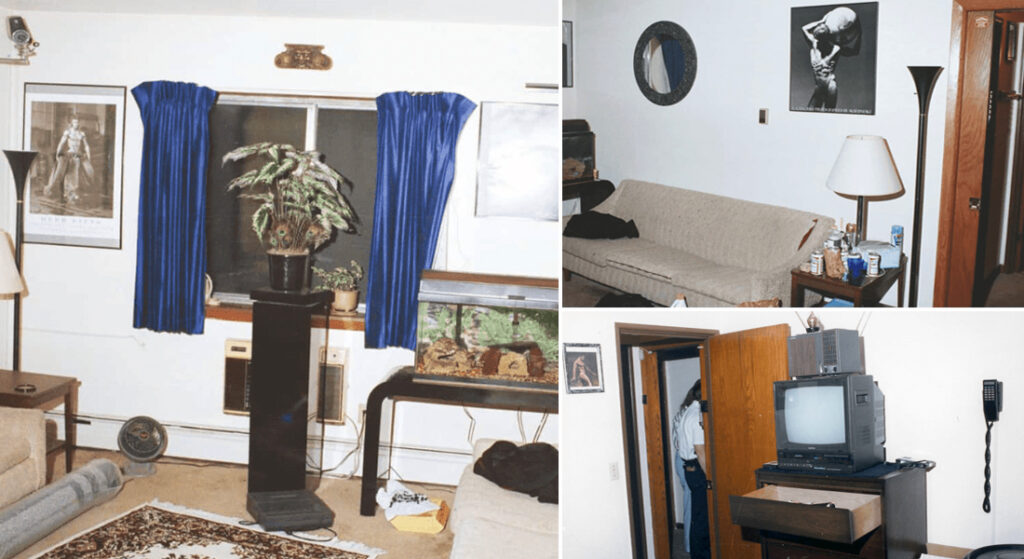
Dahmer was also known for giving out sandwiches to his neighbors, offering one to his neighbor, Pamela Bass. Unlike Glenda Cleveland, the fictional character in the series, she ate it. According to Pamela Bass, “Dahmer was kind, sharing, and fond of feeding his neighbors.” However, after his arrest, she now thinks that the sandwich probably contained human meat.
Dahmer Met Tracey Edwards at Grand Avenue Mall
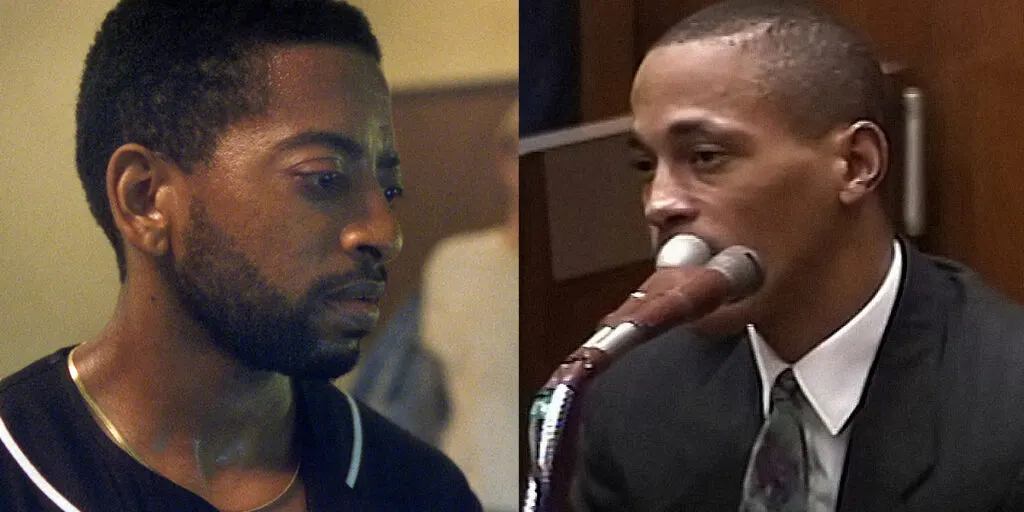
In the first episode, we’re introduced to , the man who put an end to Dahmer’s killing spree. The miniseries shows Edwards meeting Dahmer at a night club, but according to Edwards’ own testimony, the two met at Grand Avenue Mall. Dahmer was not a stranger to Edwards, the two had seen each other several times before and occasionally greeted each other. One evening, Dahmer started talking with Edwards and his two friends, presenting himself as a photographer who wanted to party and pay for photos. According to Edwards, they had all left the mall with Dahmer, gone to the liquor store, and decided to split up. The plan was to buy alcohol, invite some women over, and then meet back up at Dahmer’s apartment – but Dahmer gave his friends the wrong address.
Tracey Edwards Was Held Hostage And It Was More Intense Than Portrayed
Edwards testified in Dahmer’s criminal trial. He stated that Dahmer would switch personalities, going from evil to nice in minutes, and “throughout the entire ordeal” would go into humming and chanting spells. As Dahmer forced Edwards into the bedroom at knifepoint he held the weapon up against his body, not at a distance like in the show, threatening to kill him if he didn’t comply. Edwards, who is admittedly heterosexual, testified that other than Dahmer putting his head on his chest to hear his heartbeat, there were no other physical sexual encounters.
Edwards was held hostage by Dahmer for hours. To survive, he continuously tried to talk Dahmer out of handcuffing both of his wrists, and at one point, refused to lay face down on the floor. “I was basically talking with this person trying to let him know I was his friend.” Edwards testified.
Tracey Edwards Saw Mutilation Photos and Human Remains In The Apartment
According to Edwards’ , he also saw human remains and photos of mutilated bodies. He also claimed that when he escaped the apartment to flag down the police – they sent him back to the apartment alone to retrieve the handcuff key, and when he ran again, then they escorted him back to Dahmer’s apartment. Some news outlets are skeptical of this account. “Edwards’ story changed throughout the aftermath of Dahmer’s arrest, including appearances on talk shows in which he talked about the numerous locks on the door, while photos of the scene showed only two.” reads an article written by The Milwaukee Sentinel.
Did Edwards change his story or did he just give more details when asked different questions from different sources? Since the photos available are only taken from the outside of the door, how can anyone determine how many locks were installed on the inside? Dahmer himself was foggy about the details of that night, which is also cohesive with . “He [Dahmer] also related that he didn’t remember showing any photos to the victim, nor does he remember threatening the victim with a knife. I asked Mr. Dahmer if he remembered stating anything to the victim about threatening him or about cutting his heart out and he stated that he does not recall doing this,” reported Det. Dennis Murphy in Dahmer’s Confession
Konerak Sinthasomphone Did Not Know Jeffrey Dahmer
Episode 2 depicts the story of 14-year-old Konerak Sinthasomphone. In the series, Konerak is standing outside of a liquor store when he is invited to Dahmer’s apartment. He decides to go with Dahmer, knowing that Dahmer drugged and molested his brother Somsack two years prior. This diverts from Jeffrey Dahmer’s account in multiple ways. First, Dahmer met Sinthasomphone at the Grand Avenue Mall in Milwaukee on the afternoon of May 26, 1991. Second, Dahmer was shocked to learn that Somsack, the child he molested 2 years prior, was Konerak’s brother. When Dahmer was charged with molestation, the family was not present for the sentencing.
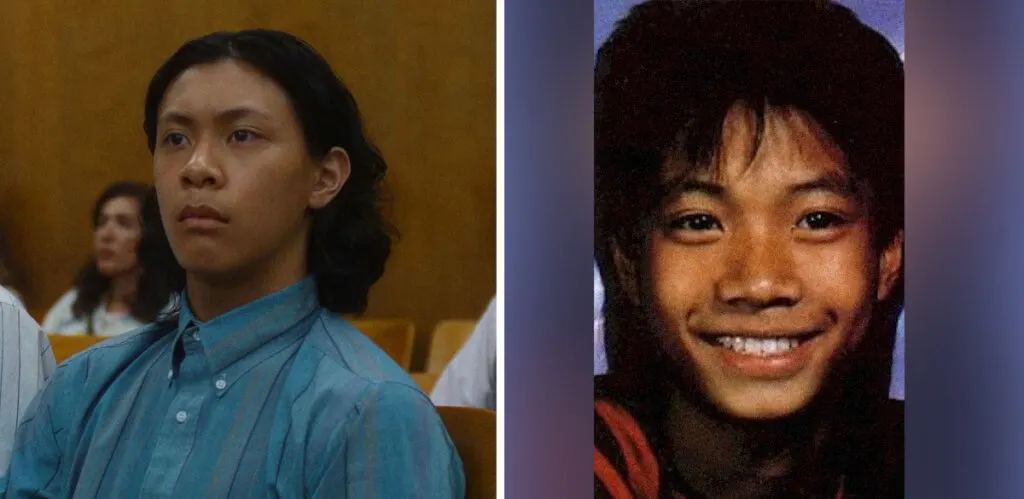
Anouke, the eldest brother of the Sinthasomphone family, was asked by why Konerak would go anywhere near Dahmer, given Dahmer’s history of sexually assaulting Somsack. “No, we didn’t even know his name. We didn’t know his name or what he looked like. We didn’t even know since it happened the first time.” Anouke told reporters. Konerak should have been taken into custody for indecent exposure, , then the police would have learned the truth. “They should’ve checked him out. Automatically, they should’ve arrested my brother because he was naked in the public.”
Women Confront Dahmer In Sinthasomphone Case, Police Bias, And Negligence
Konerak Sinthasomphone’s condition was reported to the police by multiple witnesses. Netflix also undercuts the extent of police bias and negligence in this scene.
According to Sandra Smith, the daughter of Glenda Cleveland, “The boy was naked, appeared to have been drinking, and was bleeding from his buttocks area” when Smith and her cousin, Nicole Childress, found him staggering and dazed outside Dahmer’s apartment building.
In his confession, Dahmer emphatically denied that there was bleeding near the buttocks. According to the report, “he had not had any anal intercourse or injured the victim in any way.” In the rest of his confession, he tells the story similar to the witness’s account.
“The boy, who could only mumble incoherently, was being pursued by Dahmer. My cousin stopped him and said, ‘Stay away from that boy.’ There was a confrontation, and my cousin said she was going to call the police,” Smith said.
While Smith protected the boy from Dahmer, Childress ran to a nearby pay phone and dialed 911. Two police officers arrived a few minutes later. “We tried to give the policemen our names, but he just told us to butt out,” Smith said. “I couldn’t understand why he didn’t want our names. I said, ‘What are you going to do about this? This is a boy.'”
This is the portion of the story that Netflix tells with accuracy: Dahmer told police that the young boy was his 19-year-old boyfriend. “He (the officer) was listening to Jeff, he wasn’t listening to me,” Childress said. “He wouldn’t listen to what I had to say. He told us to get lost or he would take us Downtown,” said Smith.
Glenda Cleveland, who lived in a building across the street from Dahmer, said her daughter was weeping when she arrived home because she was concerned for the young boy. This prompted Cleveland to call the police and follow up, but she was told by police that Konerak was an adult.
Dahmer Never Tried To Stop Killing, Admitted to Committing Murders In 1984
In Monster, Dahmer stops killing after Steven Hicks in 1978, then starts a killing spree after murdering Steven Tuomi in 1987. This also seems to be a misconception that was reported by the media when the story first broke. It’s unclear if the 17 people he admitted to killing were the only ones police could confirm he murdered or if they were the only victims reportedly missing. According to Dahmer’s FBI files, he admitted to committing murders between 1984 and 1985. “He [Dahmer] engaged in several homicides in which he would approach homosexual prostitutes and lure them either to a motel or his residence, where he would engage in sex, provide them with a drink that he had laced with sleeping pills, and after that kill them.” In an interview with in 1993, Dahmer explains the real reason why he was able to go without killing for periods of time. “There just wasn’t an opportunity to fully express what I wanted to do, there was just not a physical opportunity to do it then.”
Police Negligence In The Ronald Flowers Case
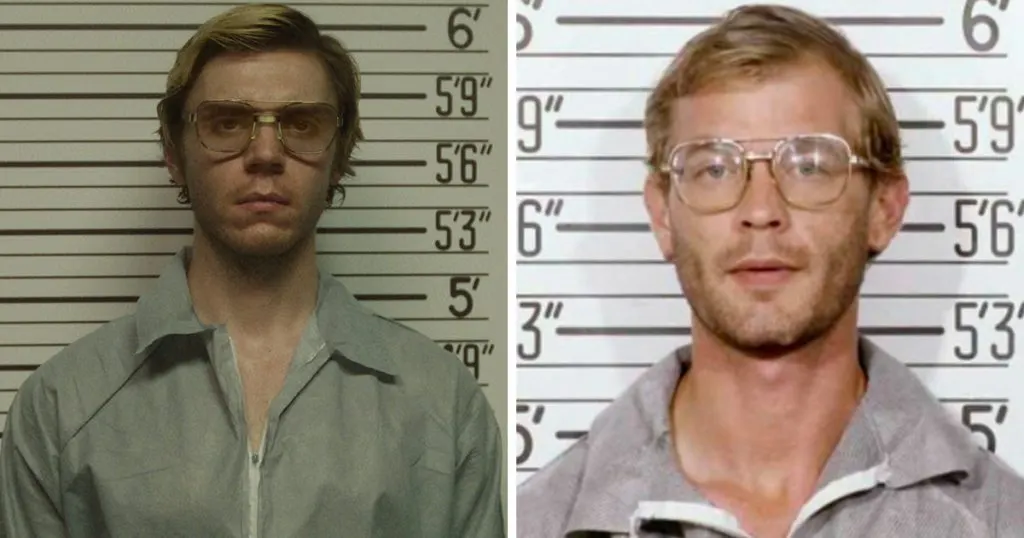
Monster The Jeffrey Dahmer Story accurately depicts Dahmer as a serial rapist. He had been kicked out of bathhouses for drugging men. Dahmer claims that most of his victims were willing to engage in sexual acts, but this was not the case with all of them. Ronald Flowers, who spoke about his experience with Dahmer in the documentary Jeffrey Dahmer: Mind of a Monster, Ronald described his experience as “sheer terror” and “a nightmare”. In the show, the physical evidence that supported his claims was omitted. While testifying in court, Flowers said that he was bruised, there was a ligature mark around his neck, and he had been sexually assaulted.
Dahmer Knew Anthony Hughes For A Year
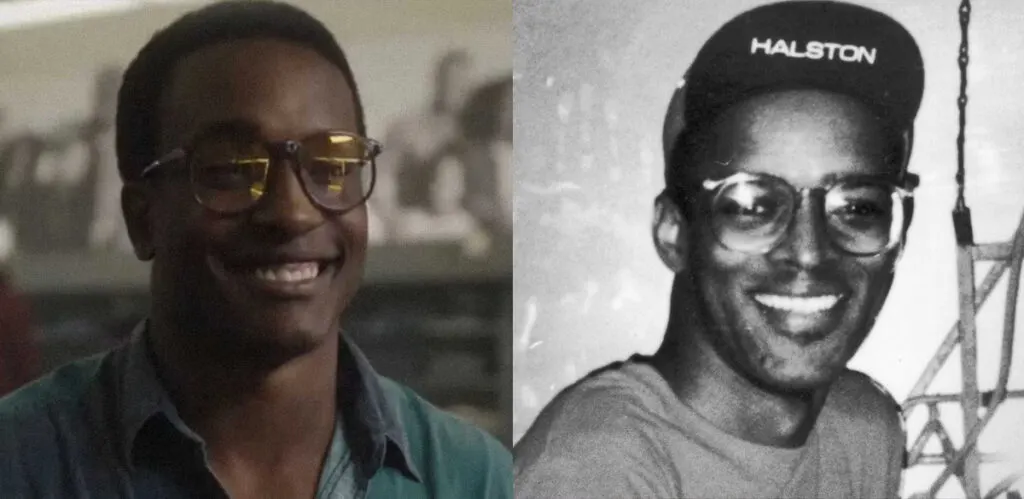
In episode 6, we’re introduced to Anthony ‘Tony’ Hughes. Hughes was a mute, deaf man who reportedly lost his hearing at a young age as a side effect of medication, and was also an aspiring model. According to Jeffrey Dahmer’s confession following his arrest, the two never met before he lured Hughes back to his apartment where he drugged and murder him. Hughes’ friends, however, said they had seen the two together before, with some claiming that Dahmer and Hughes knew each for more than a year. Shirley Hughes, Anthony Hughes’ mother, asserts that Monster is inaccurate, stating that Dahmer and Tony Hughes’ encounter “didn’t happen like that.” She also asserted that she knew of a friend named Jeff, but wasn’t aware of his last name.
Dahmer Requested To Be Placed With The General Population
In preparation for Dahmer’s defense, lawyer Wendy Patrickus recorded over 32 hours of conversations with the killer that took place from July to October 1991. The prison authorities weren’t fully responsible for placing Dahmer in the general public, this was a request made by Dahmer himself, “I can’t do this anymore. I can’t sit in isolation. If I can’t interact with other people, that will be worse than if I died. I’m going to be asked to be placed in the general population… I don’t think I will be able t keep a level head. I really don’t. I’ve always been one who needs stimulation, mental stimulation.” Dahmer told his lawyer in a recorded interview. Patrickus advised Dahmer not to go through with this, telling him “you’re not going to make it.”
Christopher Scarver Claims Dahmer Harassed Him In The Prison Gym
In the 10th episode, we meet Christopher Scarver, the man who fatally beat Jeffrey Dahmer and fellow inmate Jesse Anderson in a prison gym. The show ends with Scarver’s account of why he killed Dahmer, but didn’t show everything else Scarver claimed took place. According to Scarver, he had just retrieved his mop and was filling a bucket with water when someone poked him in the back. “I turned around, and [Dahmer] and Jesse were kind of laughing under their breath… I looked right into their eyes, and I couldn’t tell which had done it. ” Scarver told the New York Post.
The Conflicting Stories of Dahmer Taunting Prisoners and Guards
In 2015, Scarver told the New York Post what drove him to kill Dahmer, and he carried out the murder. Scarver also believes the prison guards “helped make it happen” by putting him with Dahmer unsupervised. Lawyer Gerald Boyle, who represented Dahmer and also served on a governor’s commission that investigated the murders of Dahmer and Anderson, doubts Scarver’s story. Nothing was mentioned about Dahmer taunting anyone in prison or joking about his crimes at his murder trial or in a six-month follow-up interview. “He told me he had a hit list of five guys who he did not feel were worthy of the word murderer because of who and how they killed,” Boyle said.
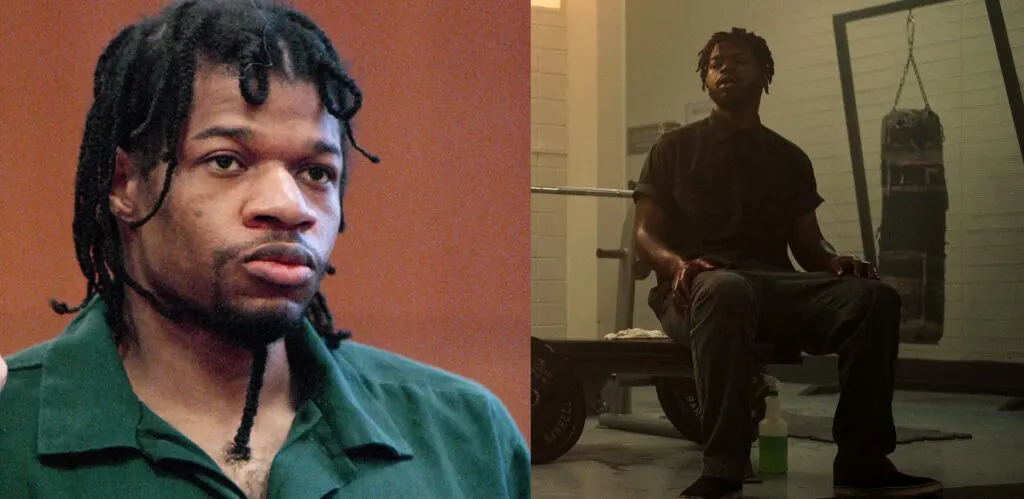
Steve Kohn, the lawyer who represented Scarver, does not believe his client’s claims either. Kohn said nothing in the public record supports what Scarver says in the New York Post article. “In the interview with Boyle, Scarver said that Dahmer and Anderson had murdered for unacceptable reasons and that being in the same work detail with them was humiliating.”
Scarver, who should’ve been considered insane, was prone to hearing voices and hallucinations. In his first murder trial “there was testimony that Scarver believed he was a million years old. He also professed to be the son of God.” says reporter Jim Stingl.
Pastor Roy Ratcliff, who baptized Dahmer in prison and presided at his memorial service, told the New York Post that Dahmer had a morbid sense of humor. “If he [Dahmer] saw a guard that was nervous and standing near enough to hear him, he would say, ‘I bite,’” said Ratcliff. “Usually the guard would jump away and that would make Jeff laugh.” He added that Dahmer would “put a sign on the wall of his cell that read, “Cannibals Anonymous Meeting Tonight.”
Boyle had this to say about that article: “When I contacted him [Ratcliff] again about the Post article, Ratcliff said he was quoted accurately, but admitted he never saw the sign and did not hear any of this from Dahmer. “These are stories guards told me.”